

One Key Factor to Boost Team Performance
A significant two-year study by Google, conducted from 2012, revealed that high-performing teams share one common trait: psychological safety.
The relationship between psychological safety and team performance metrics has become a prominent topic of interest in recent years.
- Teams with higher levels of psychological safety have a 12% higher rate of achieving their goals, 10% higher productivity, and 8% higher employee satisfaction. (Harvard, 2017)
- Startups with higher levels of psychological safety have a 22% higher success rate in fundraising, a 33% higher likelihood of launching new products, and a 50% higher survival rate after five years. (MIT, 2018)
So, what is psychological safety?
Imagine a workplace where you:
- Feel comfortable proposing new ideas, even if they might fail, without fear of judgment or punishment.
- Collaborate effectively, openly sharing information and coordinating smoothly with colleagues.
- Learn from mistakes, viewing them as opportunities for personal and collective growth.
- Contribute fully, feeling valued, trusted, and ready to give your best for the common goal.
This is what "psychological safety" means.
However, there are several common “misunderstandings” about this concept. Misunderstanding 1: Psychological safety = trying to be “friendly” at work Ensuring employees feel safe doesn’t mean we have to support and accept every opinion in a cheerful and agreeable manner. In a truly psychologically safe environment: - Communication is open and fair, respecting all personalities and viewpoints, even when conflicts arise. - Feedback is honest, focusing on problem-solving rather than avoidance or criticism.
Misunderstanding 2: Psychological safety = “easy-going and lenient”
Performance standards and psychological safety are closely linked. Let’s explore this further with the matrix below!
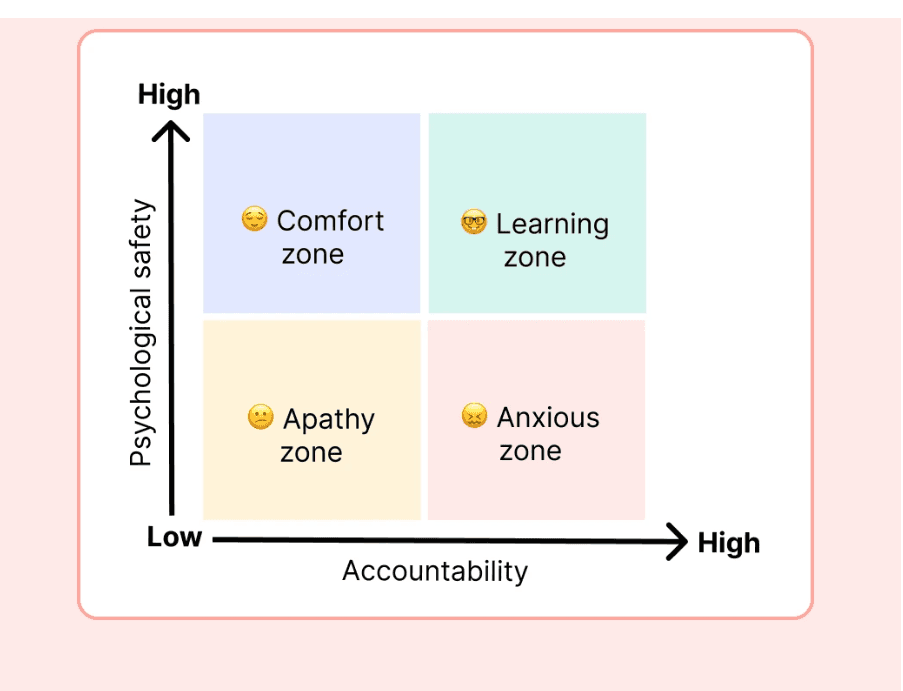
- When psychological safety is low and work standards are high, employees become anxious about voicing their opinions and hesitate to innovate.
- In workplaces with high psychological safety but low work standards, everyone remains in their “comfort zone” - they cooperate but are not ready to face challenges.
- When both psychological safety and work standards are low, employees become apathetic and unmotivated, choosing self-preservation over effort.
- When both psychological safety and work standards are high, all members are motivated to enter the learning and growth zone.
Thus, leaders who elevate work standards and goals in a psychologically safe environment create the optimal conditions for teams to enter the “learning zone” and achieve breakthrough performance.
Misunderstanding 3: Psychological safety depends on individual personality Psychological safety is a team issue and is not related to whether a member is introverted or extroverted. Anyone can freely propose ideas in a psychologically safe environment. If the environment is not safe enough, even extroverted individuals won’t speak up.
How to Build Psychological Safety in the Workplace?
It is clear that leaders are both the origin and the driving force for developing psychological safety within teams. If they are willing to reveal their “vulnerable,” “uncool” moments, and if they can say, “It’s okay not to be okay!”, it will make a significant difference. It allows employees to feel they can also express their emotions just like their managers do.
To achieve the above, emotional recognition, listening skills, and empathy are the fundamental competencies that leaders need to cultivate. Learn more of our customized leadership training for managers and leaders, focusing on Emotional Intelligence for your team, check out our website https://www.thenewleaders.asia/en
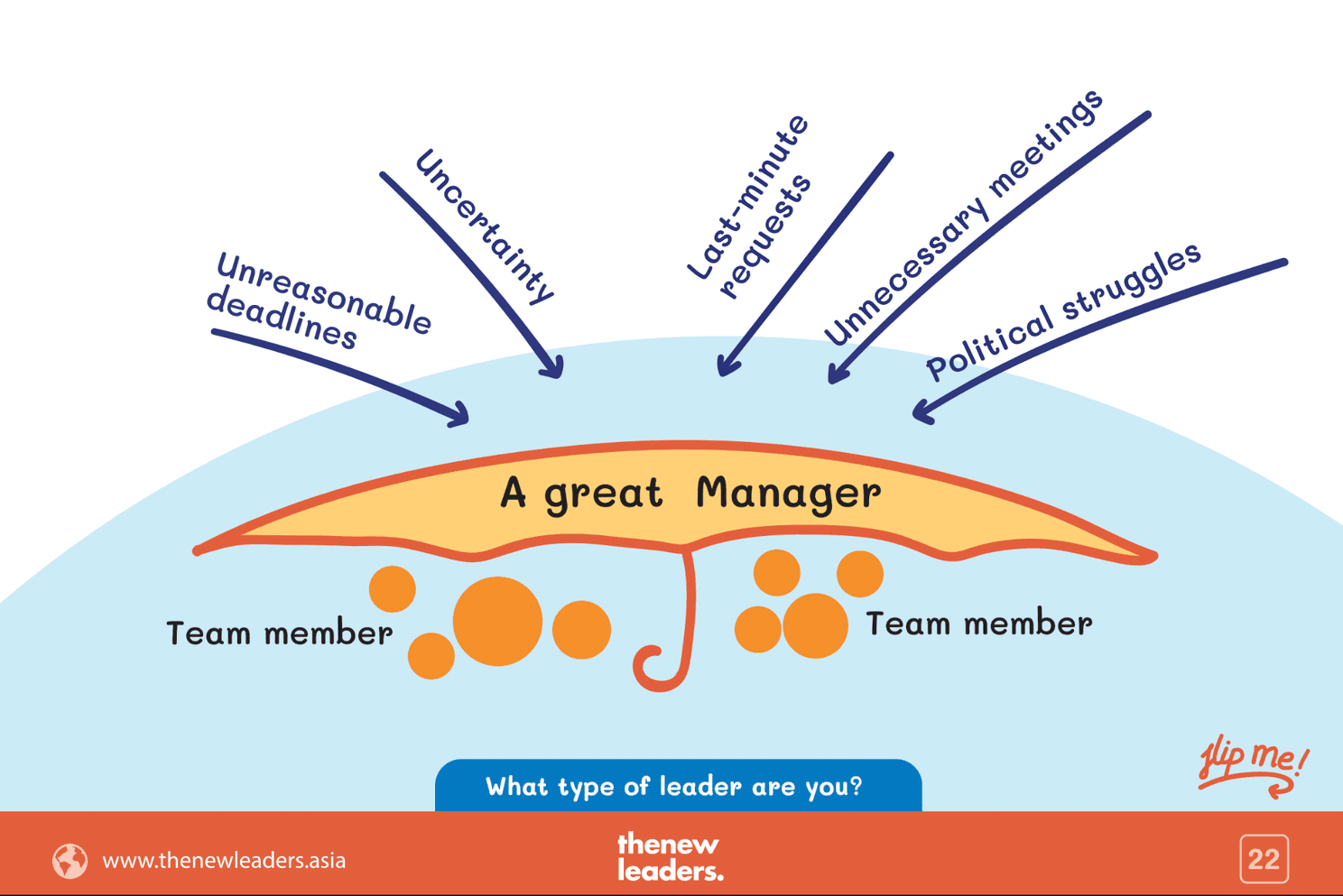
These topics are vividly illustrated in the Vision Craft collection by The New Leaders, a product that depicts leadership and communication skills with emotional intelligence through creative drawings, offering interesting leadership lessons to learn from. Topic 1: Goal-setting Topic 2: Exploring Mindsets Topic 3: Let’s Get Motivated! Topic 4: What Type of Leader Are You? Topic 5: Feeling with Others Topic 6: Lift People Up with Your Trust Topic 7: Know Your Emotions Topic 8: Develop Your Team Topic 9: Speak So Others Want to Listen Topic 10: Handle Stress - Get Your Hype On Topic 11: Healthy Conflict is Good Topic 12: Resilience
Contact The New Leaders to grab the leadership visuals collection for yourself and your team.
-- Discover Your Inner Leadership Skills with Emotional Intelligence
Are you ready to unlock your true potential and lead with confidence? Join me, Ngan Tran, as I guide you through the journey of discovering and harnessing your core values using the power of Emotional Intelligence (EQ). With my background in the Harvard Executive Leadership Program and a Master’s in Executive Leadership Coaching, I specialize in EQ leadership training, communication, and effective leadership development. I’m dedicated to helping you achieve personal and professional excellence.
Let’s embark on this transformative journey together! Shall we?
